
By Marlon Kerim Weinstabl
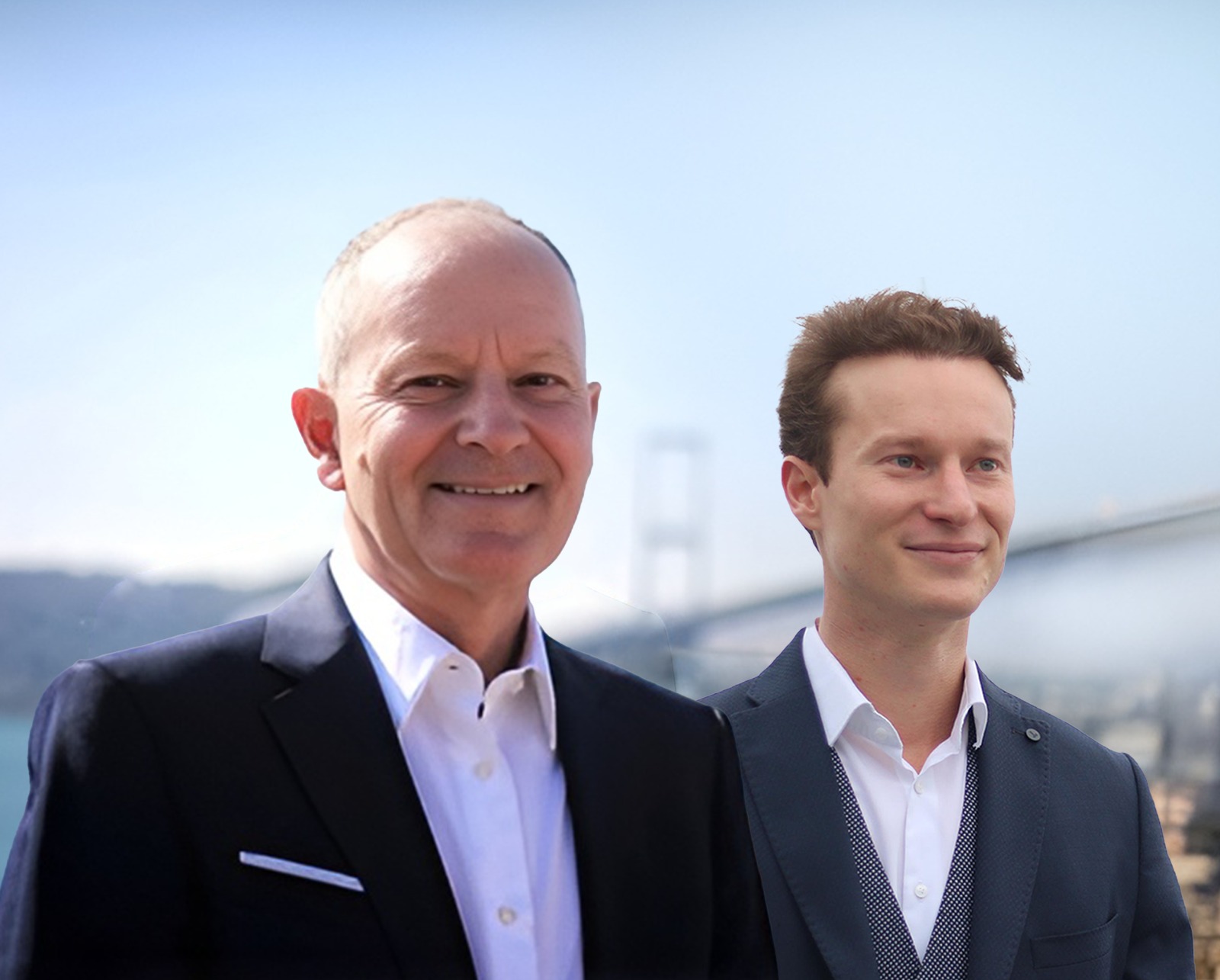
There are moments in business that are not really about business. They are about time.
In recent weeks, I have watched my father reach a point that many founders and shipowners do not speak about openly. Not because they lack the words, but because the truth is heavy. You spend decades building, pushing, surviving storms you did not ask for, and then one day you realize you have started to measure life differently. Not by projects completed, but by energy left. Not by expansion plans, but by the people you still want to sit with, talk to, and come home to.
That is the place my father is standing in now. And it is from that place that this article must be written. Because this is not a corporate announcement. It is a personal handover.
My Father's Farewell, and What It Really Means
My father built his life around work. He did it with discipline, with a kind of stubborn persistence that you only understand when you have carried responsibility long enough to feel it in your bones. He is proud of what has been built, but he is also honest about what it cost. Time. Presence. The quiet things that do not show up in financial statements.
Over the last year, I have heard him speak differently than he did when I was younger. He speaks about how precious time is. About how the “little things” that once felt insignificant can become priceless when you finally slow down enough to feel them. About the strange regret that can come with success when it arrives late, when the body is older, and the energy curve has changed.
In the same breath, he speaks about gratitude. About teamwork. About how much we survived, and how the difficult years shaped you. He remembers periods when the business felt like it was turning in circles, and survival was the achievement. He remembers rebuilding from limited tools, limited systems, and still insisting on a professional way of working because pride does not depend on comfort.
What he is doing now is not quitting. It is something harder. It is letting go of the need to be the one driving every day, and trusting that what has been built will outlive a single person's presence at the wheel.
This is his farewell to an industry that gave him purpose, stress, pride, pain, and identity. And it is also his quiet decision to reclaim the part of life that shipping can easily steal if you do not protect it.
A Family Story That Started Long Before My Time
When people look at shipping groups, they often assume the story began with ships. In our family, it did not. It began with industry, machines, and the kind of post-war persistence that was less about ambition and more about building a stable platform for the next generation.
Our wider family history spans decades of continuous work across industrial machinery, maritime services, and energy logistics. The point of mentioning this is not to list milestones. It is to explain something that matters to me personally: continuity carries a certain kind of responsibility. When your name is attached to what you build, you do not get to treat it as a short-term experiment. You have to think in cycles, not seasons.
This is why the handover from my father to me is not just a leadership change. It is a shift in stewardship. A continuation of something built over time, across generations, with hard lessons learned along the way.
What I Have Learned About Shipping, and Why Leadership Must Be Human
I recently shared a message internally at our company seminar that I want to repeat here in a different way, because it sits at the center of how I think about this industry.
Shipping today is not the shipping of 20 or 30 years ago. The modern seafarer lives in a world where expectations have multiplied. The paperwork has multiplied. The compliance pressure has multiplied. The “tick-the-box” culture has spread, even when it does not match the reality onboard.
We talk about safety constantly. But we do not speak enough about fatigue as the silent fuel behind the next major incident. If you stay awake long enough, decision-making changes. Reaction time changes. You become slower, less precise, less present. And yet the system often responds to this not with relief, but with more training modules, more forms, more documentation, as if exhaustion can be solved with another checklist.
In that seminar, I described “ghost ships.” I meant ships where people are physically present but mentally fading, not because they are careless, but because the general structure in the shipping industry makes it hard to remain fully human. That is not a dramatic phrase for effect. It is a description of what happens when a system treats people like machines and then punishes them for failing to behave like machines. In our company we do it differently.
This is one of the reasons I accepted this CEO role with such seriousness. Because in shipping, leadership is not only about fleet decisions. It is about deciding what kind of culture you allow to form under pressure, and what kind of pressure you refuse to normalize.
Handing over the Reigns: What Changes, and What Must Not Change
As my father steps back from day-to-day executive leadership, I am taking over as CEO.
But titles do not replace the real work. The real work is to earn trust continuously. To make decisions that hold up when no one is watching. To build an organization that can grow without losing its character, and without sacrificing our core values within this growth.
I do not believe in leadership that hides behind distance. I believe in leadership that stays close to the front-line, and does not alienate itself from uncomfortable feedback, let alone fail to act on it. I said internally that our seafarers must be able to speak up when something is not right. I mean that. If you cannot report reality, you do not manage risk. You only manage appearances.
I also said something else that matters for the future: as we grow and become more corporate, teamwork and communication must excel in parallel. Not as a slogan, but as a daily discipline. Growth does not forgive weak coordination. It exposes it.
The Vision Forward: A Train That Has Already Left the Station
In the seminar, I used a metaphor that stayed with many people. I described our company like a train already in motion. The point was not to threaten. It was to be honest.
Change is not coming. Change is here.
We are positioning ourselves for larger-scale operations and broader trade exposure. That means we have to become more global in how we think, how we operate, and how we build teams. It also means we must be culturally adaptable, internationally minded, and mature enough to work across differences without fear. There is no future in a narrow comfort zone. Our team needs to be consistently comfortable in the uncomfortable.
Part of that future is fleet development. I announced internally that we are acquiring three second-hand MR2 product tankers, approximately 50,000 dwt, built by Hyundai Mipo. These vessels come with time charter commitments I have fixed and expose us to a segment and trade zones that will be new to most of our people. That is not only a commercial step. It is an operational and cultural step. A stage bigger, with bigger expectations.
But I want to be clear about the point of growth. It is not to inflate an ego. It is to build a platform that can last, that can survive cycles, that can provide opportunity, position ourselves in different markets, provide our clients with expanded & superior services, and that can keep people safe while doing serious work in serious markets.
We will not build the next chapter on paperwork alone. Performance matters. Competence matters. We are and will continue to be a High-Performance Organization, that values performance, respect, trust, and integrity. And the kind of performance I am referring to is not a loud, political performance. It is the quiet, reliable performance that shows up in how you plan, how you clearly communicate, how you prepare, and how you respond when things go wrong.
What I Am Carrying With Me From My Father
When a father hands over a business to a child, in this case, his son, people love to talk about legacy. But legacy is not something you inherit as a gift. It is something you inherit as a responsibility. And it is best inherited when it is a decision based on meritocracy and performance (rather than nepotism).
From my father, I carry a few things that matter.
I carry the understanding that survival years shape you, and that you must never forget that this market always moves in cycles.
I carry the awareness that work can consume a life, and that success is not worth it if it leaves you empty or absent from what matters most.
And I carry his insistence that building something meaningful is not only about perfection or speed. It is about doing it properly, with diligence, and with respect for the people building it with you.
He is stepping back with a certain peace because he believes that his time has come to leave the driver's seat, and that the next chapter under a new generation will be built on the strong foundation he has laid. I do not take that trust lightly.
A Closing That Is Not a Slogan
This is not the end of my father's relationship with shipping. It is a conscious shift away from the steering wheel. And it is the beginning of how I steer the ship (pun intended) as CEO, with my own judgment, my vision for the company's next generation, my own accountability, and my own obligation to deliver.
If I have one promise to make publicly, it is not a promise of grand words. It is a promise of seriousness and dedication to the industry I love. Of staying close to reality. Of building a culture where safety is not a theater-act, and where people are not expected to be superhuman to be considered competent high-performers.
My father's farewell, in many ways, is about time. Mine is about responsibility.
And the truth is, both are about people at different stages of their life.
Marlon Kerim Weinstabl
Chief Executive Officer


